
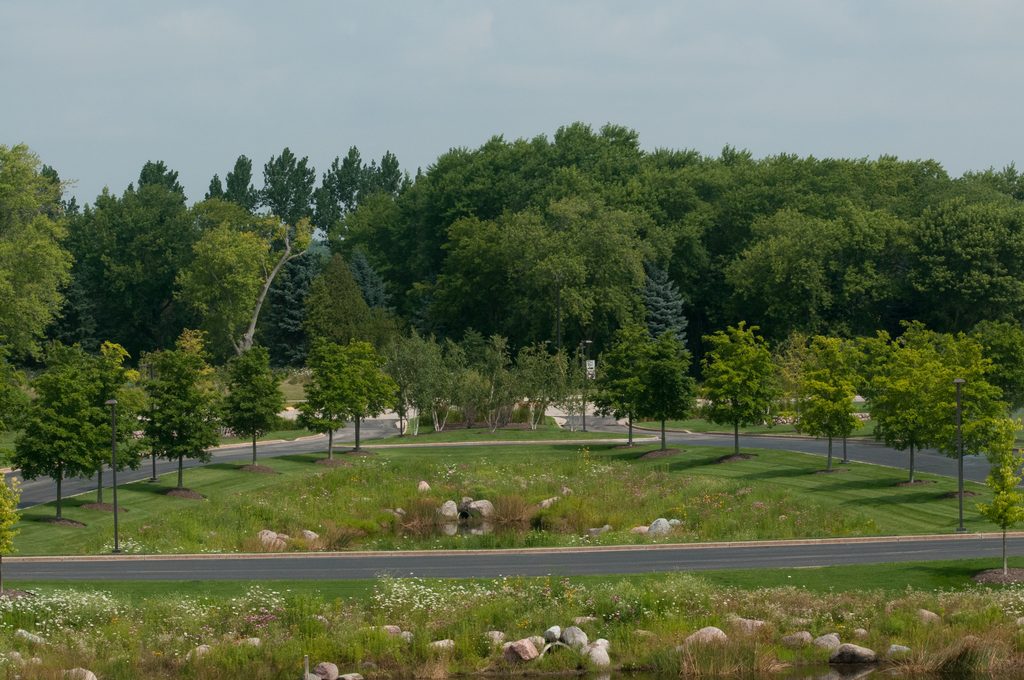
Before closing out the landscape maintenance season, take time to review what worked, what struggled, and what needs a different approach next year.
For commercial properties throughout Chicagoland and the Kenosha area, a year-end walkthrough can turn scattered observations into a practical plan. It also gives property managers and their landscape partners an opportunity to align priorities before next year’s work begins.
Start With Recurring Problems
Focus first on locations that needed repeated attention during the growing season.
Did the same lawn area stay thin? Were certain shrubs replaced more than once? Did water collect near an entrance after several storms?
Bring maintenance records, photographs, and tenant feedback to the walkthrough. These help distinguish a one-time issue from a pattern that deserves further investigation.
Record the location, what happened, and what has already been tried. Avoid deciding on a treatment before the cause has been assessed.
Review Turf and Plant Performance
Walk entrances, parking-lot islands, building foundations, and common spaces. Note where turf and plants performed well and where they failed to meet expectations.
Look for:
- Thin turf along frequently used routes.
- Repeated plant losses in the same bed.
- Shrubs that have outgrown their available space.
- Branches obstructing signs, lighting, or walkways.
- Gaps that weaken the appearance of prominent areas.
Consider whether the current planting still suits how the property is used. A narrow turf strip crossed daily by pedestrians may need a different solution than additional seed.
Seasonal appearance alone does not confirm a problem. Use growing-season photographs and service records when dormant plants are difficult to evaluate.
Document Drainage and Surface Concerns
Include areas where water repeatedly pools, soil washes out, or runoff leaves debris on pavement.
A walkthrough on a dry day may not reveal the full problem, so add photographs taken after rainfall. Note how long standing water remained and whether it affected access or maintenance.
Also record damaged edging, uneven landscape borders, and worn transitions between planting beds and pavement. These observations can help guide a more detailed assessment.
Separate Maintenance From Improvements
A useful year-end review distinguishes ongoing care from work that changes the landscape.
Routine maintenance may include mowing, bed care, pruning, and seasonal cleanup. Larger improvements could involve redesigning a failing planting bed, correcting drainage, or renovating a heavily worn area.
Clarifying the difference helps explain why an issue may require a separate project rather than another maintenance visit. Confirm what the current service agreement covers and where additional planning or pricing is needed.
Set Priorities for Next Year
Group proposed work by urgency and purpose:
- Immediate concerns: Issues affecting access or requiring prompt professional assessment.
- Recurring problems: Areas that continue to generate complaints, repairs, or replacement costs.
- Planned improvements: Projects that refresh appearance or support a change in property use.
For each item, identify the next step, who will handle it, and the preferred timing. Larger projects may need design work or phased budgeting before installation can be scheduled.
Leave With a Written Plan
The most valuable outcome is a clear record of decisions.
Ask your landscape partner to summarize observations, recommended assessments, proposed projects, and follow-up dates. A shared plan makes budget discussions easier and gives everyone a reference when spring preparations begin.
LCM can help commercial property managers connect year-end observations with maintenance priorities and longer-term landscape improvements.
Contact us today to schedule a year-end landscape walkthrough for your Chicagoland or Kenosha-area property.