
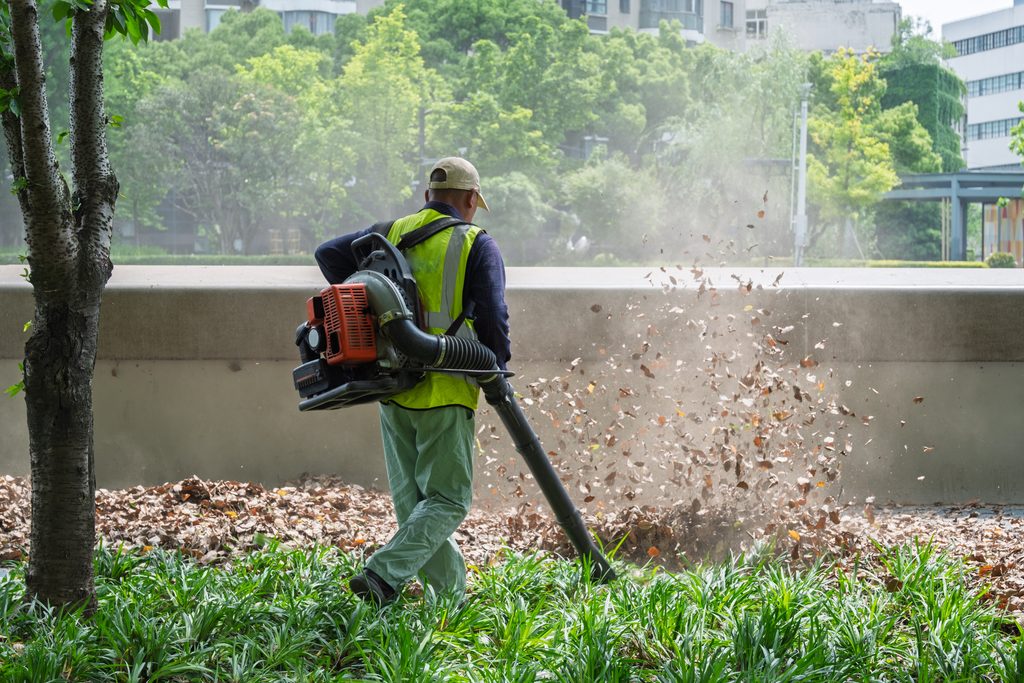
Fallen leaves are a normal part of autumn in the Chicago area and Southeast Wisconsin, but allowing them to remain on a commercial landscape can create problems that last beyond the season.
Heavy leaf accumulation can weaken turf, block drainage, create slippery walking conditions, and make entrances or common areas appear neglected. A planned leaf-removal program helps protect the landscape while keeping the property clean, accessible, and ready for winter.
Protect Turf Before Winter
Cool-season turf continues growing during much of the fall. It still needs access to sunlight, air, and moisture as it stores energy and prepares for winter dormancy.
A thick layer of leaves can block sunlight and press grass blades against the soil. When leaves become wet and matted, they may also trap moisture around the turf. Extended coverage can weaken the grass and contribute to conditions that favor snow mold and slow spring recovery.
Regular leaf removal gives turf a better opportunity to enter winter in a healthy condition.
Keep Drains and Walkways Clear
Leaves do not always remain where they fall. Wind and rain can move them into storm drains, curb lines, parking lots, building entrances, and pedestrian areas.
When leaves collect around drains, they may restrict water movement and contribute to standing water during fall rainstorms. Once temperatures drop, poorly drained areas can become icy. Wet leaves can also make sidewalks and other paved surfaces slippery.
Removing leaves from both landscaped and paved areas helps keep the property functional and easier to navigate.
Maintain a Professional Appearance
Entrances, monument signs, courtyards, parking-lot islands, and gathering areas are often the first parts of a property that visitors notice. Heavy leaf accumulation can make these high-visibility areas look unfinished, even when the rest of the landscape is well maintained.
Routine cleanup helps preserve curb appeal throughout the season. This is especially important for commercial offices, retail centers, healthcare facilities, senior living communities, multifamily properties, and associations that experience regular visitor or resident traffic.
Use Staged Leaf Removals
Waiting until every tree has dropped its leaves may seem efficient, but a single final cleanup is not always the best approach for a large commercial property.
Different tree species lose their leaves at different times. Wind can also move leaves back into previously cleared areas. Staged removals throughout October and November help keep leaves from becoming deeply matted or accumulating around entrances, drains, and curbs.
The right schedule depends on the property’s tree canopy, surrounding vegetation, traffic patterns, and appearance standards.
Coordinate Leaf Cleanup With Other Fall Services
Leaf removal should be part of a larger fall maintenance plan. It can be coordinated with:
- Final mowing visits
- Perennial cutbacks
- Bed cleanup
- Irrigation winterization
- Tree and shrub inspections
- Snow and ice preparation
Coordinating these services helps ensure important areas are not overlooked as the landscape transitions into winter.
Prepare Your Property for a Healthier Spring
Fall cleanup is about more than appearance. Removing leaves at the right intervals helps protect turf, support drainage, reduce spring cleanup needs, and keep commercial properties looking cared for throughout the season.
LCM develops fall cleanup programs around the specific needs of each property. Contact us today to discuss leaf removal and seasonal maintenance for your commercial landscape.