
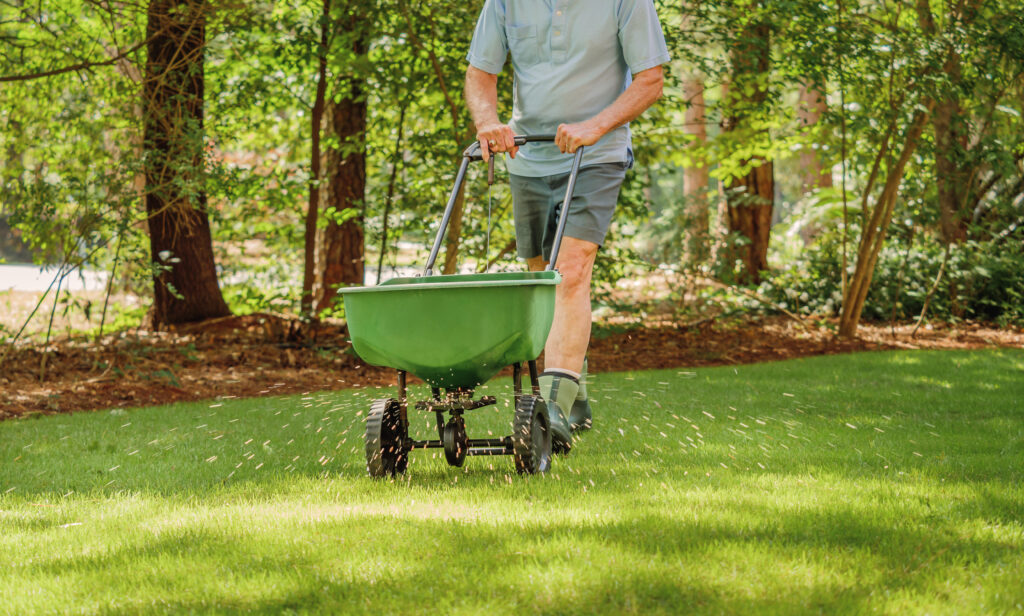
After months of heat, foot traffic, mowing, and inconsistent rainfall, commercial turf can look thin, pale, or uneven by the end of summer. Fortunately, fall brings better growing conditions for the cool-season grasses commonly used throughout Chicagoland and southeastern Wisconsin.
A properly timed fall fertilization program provides nutrients while the turf is actively growing. It can support recovery from summer stress, improve density, and help the lawn enter winter in better condition.
Why Fall Is an Important Fertilization Window
Cool-season grasses grow most actively during spring and fall. As temperatures moderate and soil remains warm, turf can use available nutrients more effectively than it can during periods of intense summer heat.
Nitrogen is the nutrient most closely associated with green color and leaf growth. It also supports the production of proteins the plant needs for growth and recovery. When applied at an appropriate rate, fall nitrogen can help turf rebuild after summer without creating the excessive surge growth that may occur when fertilizer is overapplied.
Timing still matters. Fertilizing turf that remains severely drought-stressed, diseased, or poorly irrigated may produce disappointing results. The lawn’s overall condition should be evaluated before an application is scheduled.
It Helps Turf Recover From Summer Stress
By September, weak areas are often easy to identify around parking lots, sidewalks, entrances, loading areas, and heavily traveled common spaces. These areas may have experienced heat, drought, soil compaction, or repeated traffic throughout the summer.
Fall fertilization supports active turf as it produces new growth and begins filling minor gaps. This can improve color and density while helping the lawn recover from seasonal wear.
However, fertilizer cannot correct every cause of decline. Thin turf caused by compacted soil may need aeration. Bare areas may require overseeding. Brown patches caused by insects, disease, or poor irrigation coverage need to be diagnosed and addressed directly.
It Supports Root and Plant Development
The most visible result of fertilizer is often greener grass, but healthy turf depends on more than its appearance above ground.
Fall is an active growth period for cool-season turf roots. A well-planned nutrient program supports the biological processes involved in root growth, energy storage, and recovery. Stronger roots help grass make better use of available water and nutrients and improve its ability to tolerate future stress.
Phosphorus and potassium also play roles in plant development and stress tolerance, but they should not be applied automatically. Soil-test results can help determine whether these nutrients are actually needed.
This is especially important for properties in northern Illinois and southeastern Wisconsin, where soils may include heavy clay, disturbed construction fill, alkaline conditions, or uneven nutrient availability. Wisconsin also restricts the use of phosphorus-containing turf fertilizer except under certain conditions, making site-specific recommendations important for Kenosha-area properties.
It Can Help Improve Turf Density
Dense turf creates a more uniform, well-maintained appearance across a commercial property. It also leaves less open space where weeds can become established.
Fall fertilizer can support existing grass as it thickens and recovers, but it will not create new grass plants in completely bare areas. Properties with significant thinning may benefit from combining fertilization with core aeration and overseeding.
Aeration reduces compaction and improves the movement of air, water, and nutrients into the soil. Overseeding introduces new grass into weak areas. Fertilization then supports the actively growing turf and developing seedlings when included appropriately in the renovation plan.
These services should be coordinated carefully. New seed also requires consistent moisture, good seed-to-soil contact, and protection from excessive traffic during establishment.
It Helps Prepare Turf for the Next Growing Season
Fall fertilization is not only about making a lawn look better before winter. The condition in which turf enters dormancy can influence how well it resumes growth the following spring.
Turf that has adequate nutrients and has recovered from summer stress is better positioned for a more consistent spring green-up. Improving density in fall can also reduce the amount of repair needed when the next growing season begins.
That does not mean more fertilizer always produces better results. Excess nitrogen can lead to unnecessary growth, increased mowing demand, nutrient loss, or greater disease susceptibility. The application rate and timing should reflect the turf species, site conditions, irrigation, soil information, and overall maintenance program.
Start With the Property’s Actual Needs
A fall fertilization plan should begin with a property inspection, not a standard application made without considering the site.
Before fertilizing, evaluate:
- Turf color and density
- Irrigation coverage
- Soil compaction
- Drainage and runoff
- Weed pressure
- Insect or disease activity
- Areas that may need aeration or overseeding
- Previous soil-test results
This assessment helps determine whether fertilizer alone is appropriate or whether other problems need to be corrected first.
Fall fertilization can be one of the most valuable parts of a Chicagoland commercial turf program when it is applied at the right time and for the right reasons. By coordinating nutrients with irrigation, mowing, aeration, overseeding, and weed management, property managers can support healthier turf now and a stronger landscape next spring.
Landscape Concepts Management can evaluate your property’s turf and develop a fall program based on its specific condition, use, and long-term needs. Contact us today to get started!